
Introduction
Accessibility is a fundamental right for everyone, regardless of age, gender, ethnicity, or physical condition. That is why it is essential to provide suitable accessible bathroom equipment for people with reduced mobility (PRM).
Accessible bathroom equipment is designed to facilitate access to toilets, showers, sinks, and all daily hygiene facilities for individuals with reduced mobility, including wheelchair users or those with other mobility difficulties. These solutions provide greater independence and an improved quality of life.
The primary purpose of accessible bathroom equipment is to make daily hygiene routines accessible to everyone, with the main goal of maximising the autonomy of people with disabilities.
Basic Accessible Bathroom Equipment
Grab Bars
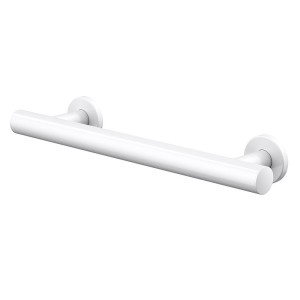
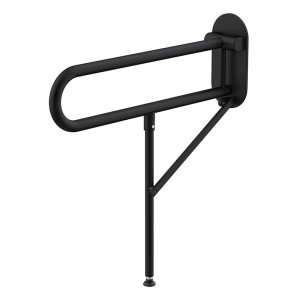
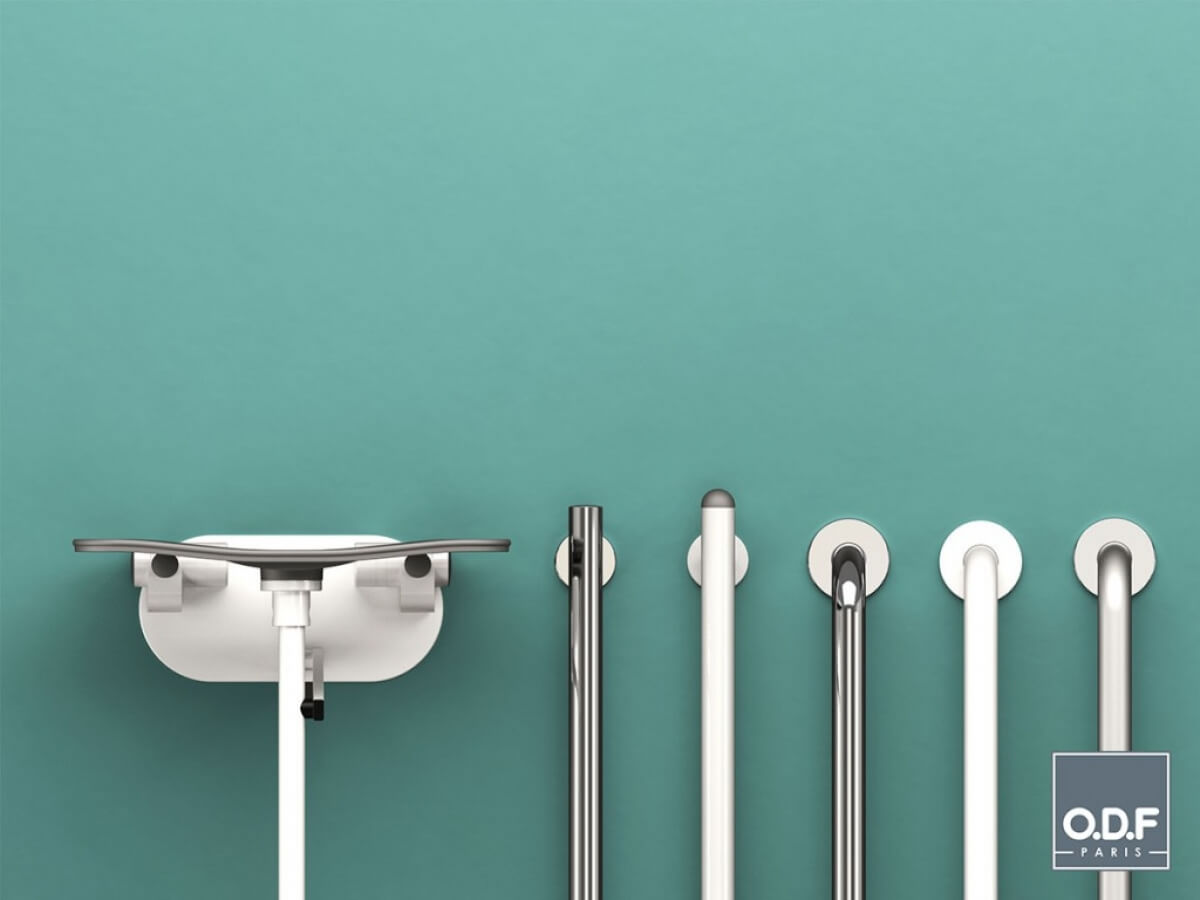
Grab bars are the primary equipment for accessible bathrooms. They can be strategically placed to improve stability and balance during movement.
Shower Grab Bar
Installed in the shower, these bars prevent slips on wet floors and assist users in sitting down and standing up from a shower seat.
Toilet Grab Bars
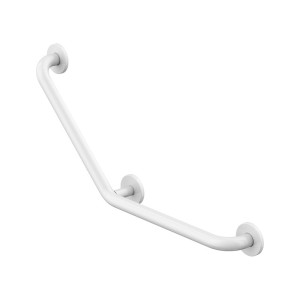
These serve a similar purpose at the toilet, helping individuals with reduced mobility to sit down and stand up. They also support wheelchair users when transferring autonomously from wheelchair to toilet. Toilet grab bars should be curved at a 135° angle to provide dual hand positions, making transfers safer and easier.
Shower Seat
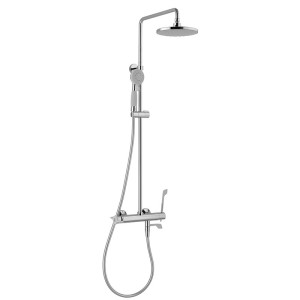
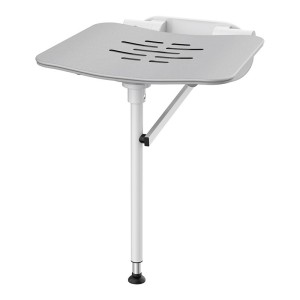
Accessible showers are essential for individuals with reduced mobility. They feature foldable seats, support bars, and handheld showerheads to allow independent use. The threshold between the shower and bathroom floor should not exceed 2 cm to ensure easy wheelchair access. Additionally, the shower must be spacious enough to allow manoeuvring, with a half-turn space (diameter 1.50 m) and lateral access space measuring 0.80 × 1.30 m, depending on whether the building is new or existing.
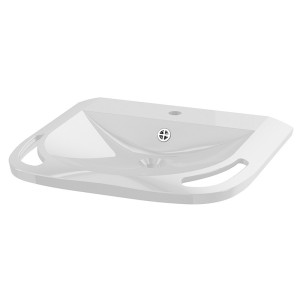
Accessible Sink
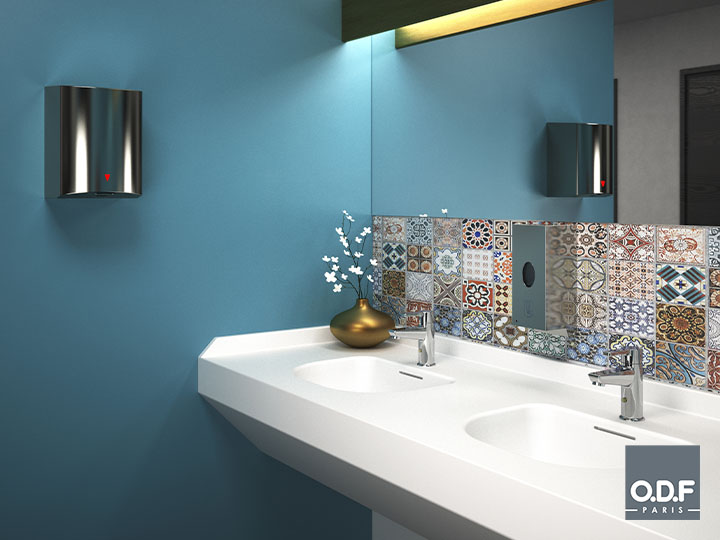
Accessible sinks are designed at a comfortable height for wheelchair users and equipped with easily reachable lever taps. Adequate clearance underneath ensures wheelchair access.
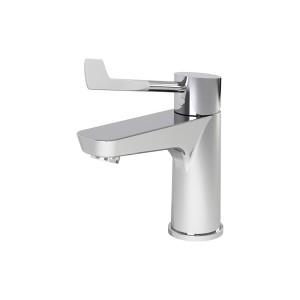
Accessible Faucet
These faucets come with specially designed levers for easy operation. These faucets are made more accessible with handles that allow wheelchair users to reach the controls without difficulty.
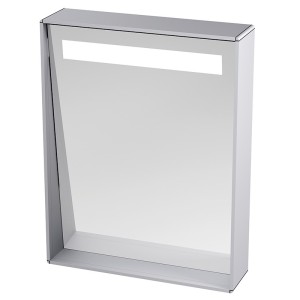
Tilting PRM Mirror
A tilting mirror is also a solution to enable individuals in wheelchairs to use this equipment without difficulty. It significantly enhances user comfort, and everyone deserves adapted sanitary equipment.
Purpose of Accessible Sanitary Equipment
Accessible bathroom equipment is not only essential for people with disabilities but also simplifies daily life for the elderly, pregnant women, or temporarily injured individuals. Accessibility ensures autonomy, equal opportunities, and human dignity.
Public institutions such as hospitals, care homes, schools, and government buildings also benefit from installing accessible facilities. It helps them meet universal accessibility requirements and guarantees safe, comfortable access for all users.
In many countries, installing accessible bathroom equipment is legally required. For example, in France, the law of 11 February 2005 mandates that public institutions provide accessible facilities.
Accessible Bathroom Standards for Persons with Reduced Mobility:
Strict rules govern the installation of PRM equipment in a bathroom (SDB). Here are some important reminders of these rules:
- Bathroom Access: It must be wide enough to allow a wheelchair to pass through (a minimum of 80 cm for existing public buildings and a minimum of 90 cm for new public buildings).
- Bathroom Door: It should open outward to facilitate emergency access. A pull bar is also recommended to assist with door opening and closing. It should be located at a height of 0.90 m from the floor and measured between 40 and 50 cm in length if possible.
- Bathroom Floor: It must be slip-resistant to prevent falls.
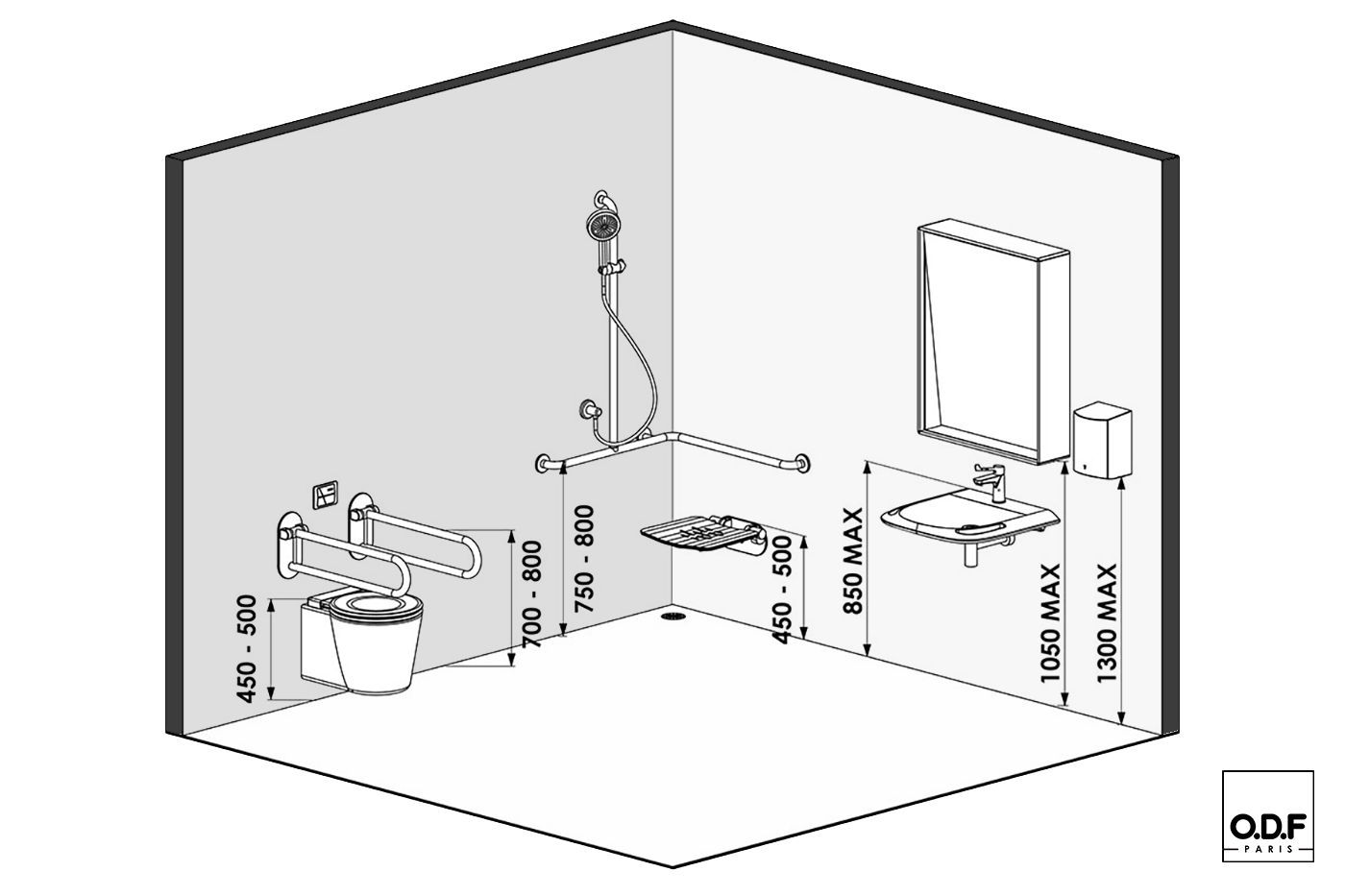
- Height of Equipment: Equipment (soap dispensers, hand dryers, etc.) must be installed at a height ranging from 0.45 m to 1.30 m from the floor to be accessible to wheelchair users.
- Sink: It must be suspended and located at a maximum height of 0.85 m, leaving a clear space of at least 0.70 m below the equipment. The space between the siphon and the edge of the sink should be between 0.30 m and 0.60 m to avoid obstructing users.
- Toilet: It must be raised (height between 0.45 m and 0.50 m) to facilitate the transition from the wheelchair to the toilet.
- Shower: It should be at ground level to facilitate access, and the threshold should not exceed 2 cm in height. A foldable shower seat should be installed at a height between 0.45 m and 0.50 m from the floor.
- Grab Bars: The horizontal part of the support bars should be installed at a height between 0.70 m and 0.80 m to facilitate movement and the transfer of a person in a wheelchair.
These rules are essential to ensure the safety and autonomy of people with reduced mobility in the bathroom. It's crucial to follow them scrupulously when installing PRM equipment.
Conclusion : The installation of accessible sanitary equipment is essential to guarantee universal accessibility and improve the quality of life for people with reduced mobility. These facilities also benefit public institutions, which must meet the requirements of universal accessibility to ensure equal opportunities and human dignity.
ODF, a French Partner for Healthcare Bathroom Equipment:
For many years, we have been developing product collections specifically designed to meet the challenges of accessibility: retractable bars, shower seats, tilting mirrors, grab bars for toilets, showers, and bathtubs.
All our equipment, manufactured in France, results from extensive research to ensure safety, comfort, and independence.
Choosing ODF products means choosing innovative design and French quality for accessible sanitary solutions.
As a trusted partner of healthcare facilities, we supply nursing homes, clinics, and hospitals across France. We also equip senior residences, combining safety with aesthetics for an aging population that values design and comfort.
We also equip many senior residences that require a combination of aesthetics and safety to cater to an aging but demanding audience in terms of design and high-end comfort.
We invite you to explore our Accessible Bathroom Collection to discover our full range of products designed to make sanitary facilities accessible to as many people as possible.